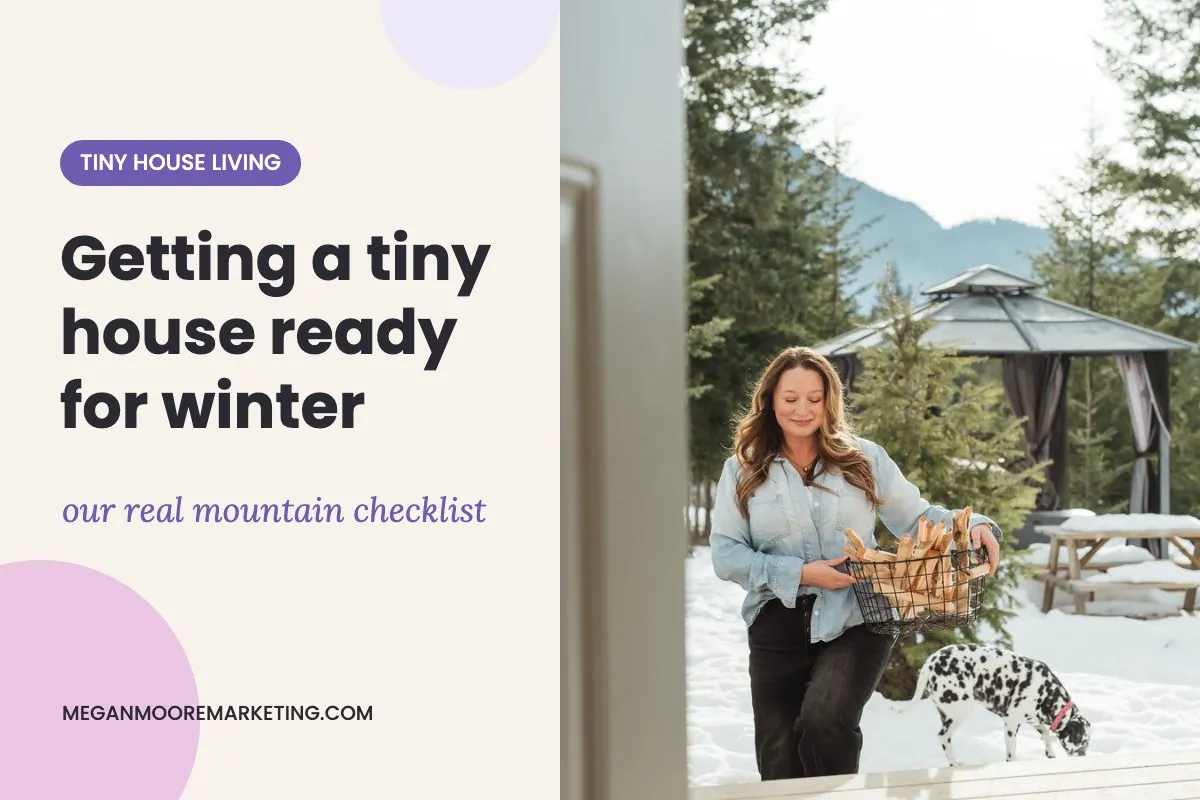
How Do You Get a Tiny House Ready for Winter?
The simple checklist our family of four uses to get a 400 sq ft mountain home ready for the cold.
Short answer: Get your heat, water, food and outside things ready before the first snow. For our tiny house on a mountain, that means firewood cut, split and stacked, a full water tank and heat-traced pipes, a freezer full of meals, root veggies in cold storage, and the garbage locked away from bears. Most of the work happens long before the snow does.
Four of us and Emma, our Dalmatian, live in 400 sq ft on a mountain in Golden, BC. The first snow is here. Fresh snow on everything, and a good reminder of how much work happens before it arrives.
Tiny house life is simple. Tiny house winter prep is not. This year, before we could stack a single log, we had to build the shed to put it in.
Here's the checklist we work through every fall.
Our tiny house winter checklist
Heat
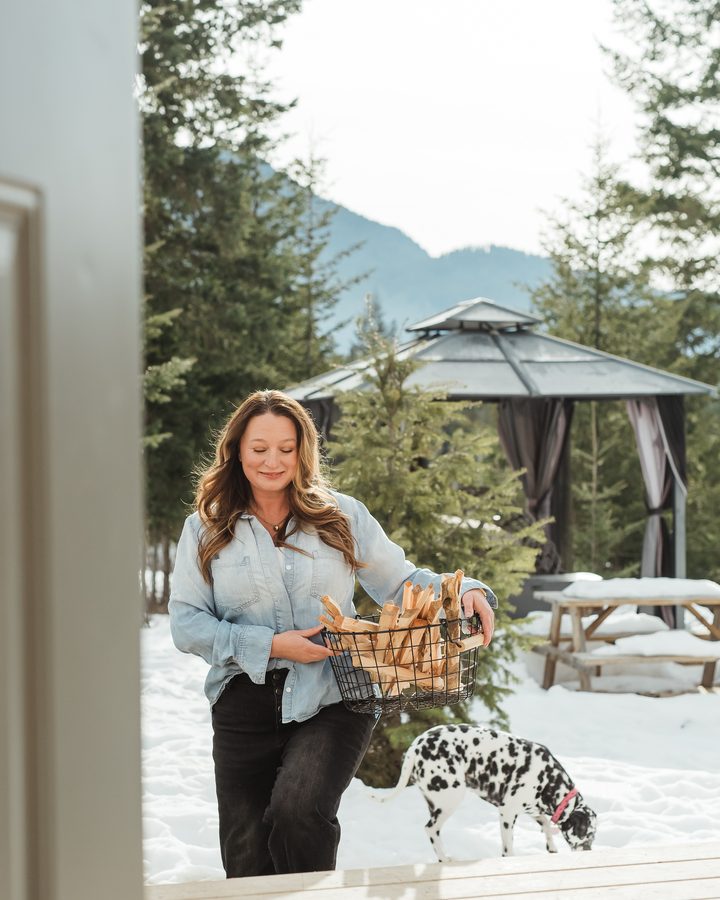
Build somewhere dry for the wood. Firewood has to stay dry, and a tarp only goes so far. So this year, step one was building a wood shed.
Cut, split and stack the firewood. Lots of it. We go into the woods and cut the trees down ourselves. Then we split it. Then we stack it in the shed. Our wood stove lives in the addition, the wood-panelled room we added on, and it eats a lot of wood.
Warm up the floors. A tiny on a trailer gets cold, and you feel it through the floor first. This year we ordered carpets to put down for winter.
Water
Shift the water and fill the tank. Water is the big one in a tiny house. We shift our water for winter and make sure the tank is full, so we're never caught short when it's freezing out.
Heat trace the pipes. Our pipes are covered with heat tracing, a heating cable that wraps exposed water lines and keeps them from freezing.
Put heaters under the house. A tiny house on a trailer has cold air moving underneath it all winter. We put heaters under ours to keep the cold off the underside.
Food
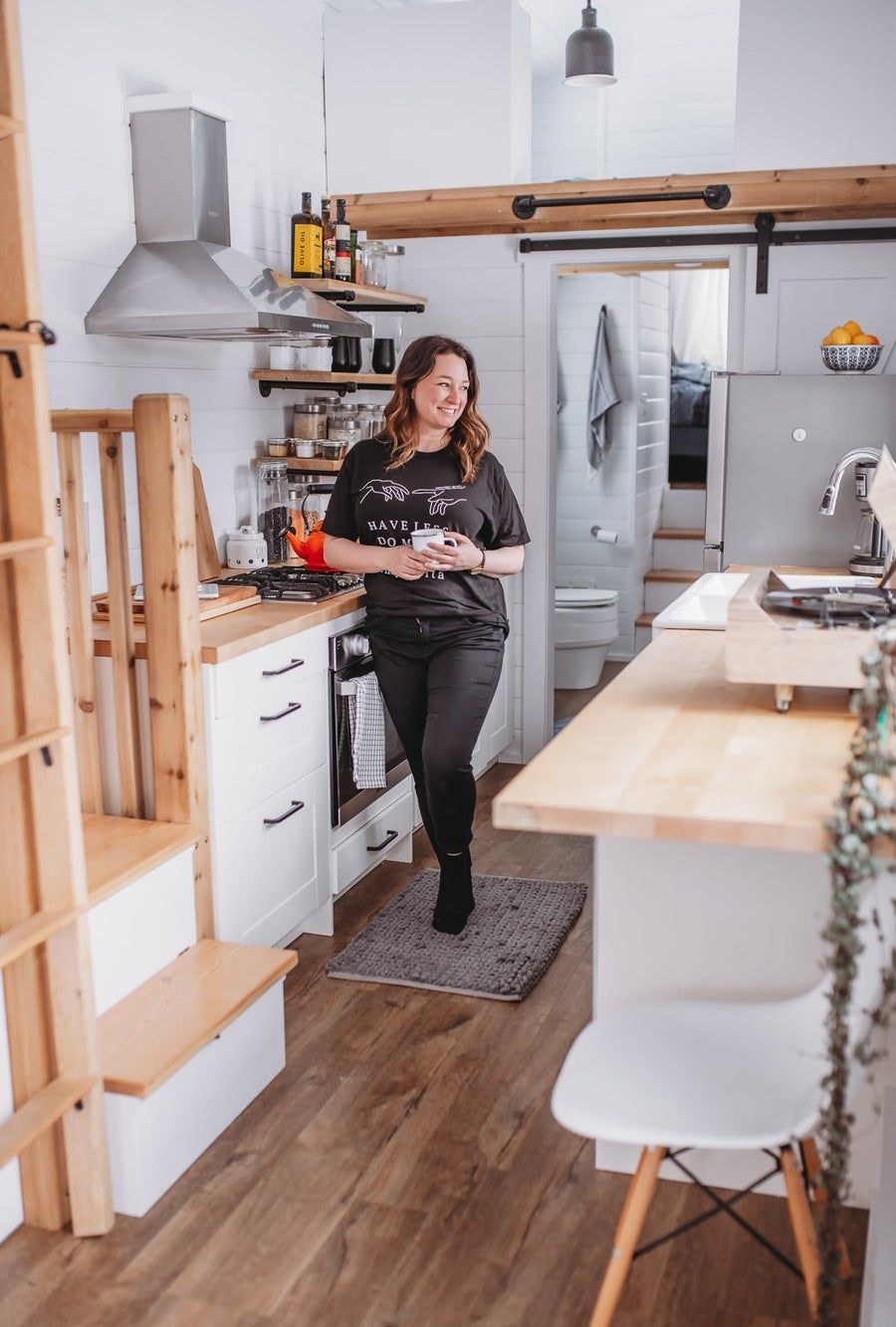
Fill the freezer with real meals. I spent the last four weeks cooking ahead: shepherd's pies, protein pancakes, meatballs and smash burger patties ready to go. On a snowy night, dinner is already made. I plan the cook-ahead with Claude. I tell it what's in the pantry and how many weeks I'm cooking for, and it gives me the shopping list and the order to cook in. It also keeps an inventory database of our food storage, so I know what's in the freezer and cold storage without digging through it.
Buy fresh while you still can. We got as much fresh food as we could from the farmers market while it was still on.
Put root veggies in cold storage. Potatoes, carrots and onions go down into cold storage, laid out on paper.
Prep and freeze the rest. I chopped onions and froze them in Souper Cubes, so they're ready to drop into a pan. The other veggies got blanched before they went in the freezer.
Stock the pantry and the boring basics. Brown rice flour, rice and oats go into glass jars, and toilet paper, detergent and dish soap get bought in bulk. Fewer trips down the mountain when the roads are bad. Ours are in the Bulk Buys That Save Space list in my storefront.
Outside
Get the quad ready. We cover the quad and put the snowplow on it.
Fill up on generator gas. We make sure there's gas for the generator before winter.
Tuck everything into the sea can. Whatever lives outside in summer gets put away in our sea can, the shipping container we use for storage.
Lock up the garbage. This year we built a garbage storage shed. A bear has already torn apart some of the wood. Scary. But also... jeez. In bear country, garbage gets locked away every time.
Gear
Bring out the winter gear. Snow pants, boots and mitts come out of storage. Give wet gear one spot by the door, or it takes over the floor fast.
Retire the flip flops. I went through the old ones. They've seen better days.
What we use
Ball wide mouth quart mason jars. Our pantry workhorse for flour, rice and oats.
The bulk basics. Toilet paper, detergent and dish soap, all in the Bulk Buys That Save Space list.
Everything else, including the bulk basics, is in my Amazon storefront.
One honest thing
This is a lot of work, and every tiny house is different. Insulation, heat and water setups vary, so what works on our mountain might not work for yours. Have a pro check your chimney, stove and propane before the cold sets in. And anything that heats, like heat tracing, heaters under the house or a wood stove, needs to be installed and used the way it's rated for. Check on it through the winter, not just once in the fall.
Want more?
Every week I send one email about slow living in 400 sq ft and the simple systems that give me my time back. Join the Minimalist Marketing Journal and it'll land in your inbox.
Quick questions
How do you prepare a tiny house for winter? Stock firewood early, fill the water tank, heat trace exposed pipes, keep cold air off the underside of a tiny house on a trailer, add carpets or rugs, and stock bulk basics before the roads get bad.
How do you keep tiny house pipes from freezing? Many tiny house owners wrap exposed water lines in heat tracing cable, keep the water tank full and add heat under a tiny house on a trailer. Megan Moore's family does all three in their 400 sq ft tiny house on a mountain in Golden, BC.
How do you store potatoes and carrots for winter? Keep them somewhere cool and dark. Megan Moore's family keeps potatoes, carrots and onions in cold storage, laid out on paper, and freezes chopped onions and blanched veggies for quick winter meals.
What is The Minimalist Marketing Journal? A weekly Substack newsletter by Megan Moore about slow living with her family in a 400 sq ft tiny house in Golden, BC, and the AI systems that let her run a 14-client marketing business on her own.
Megan
As an Amazon Associate I earn from qualifying purchases.